
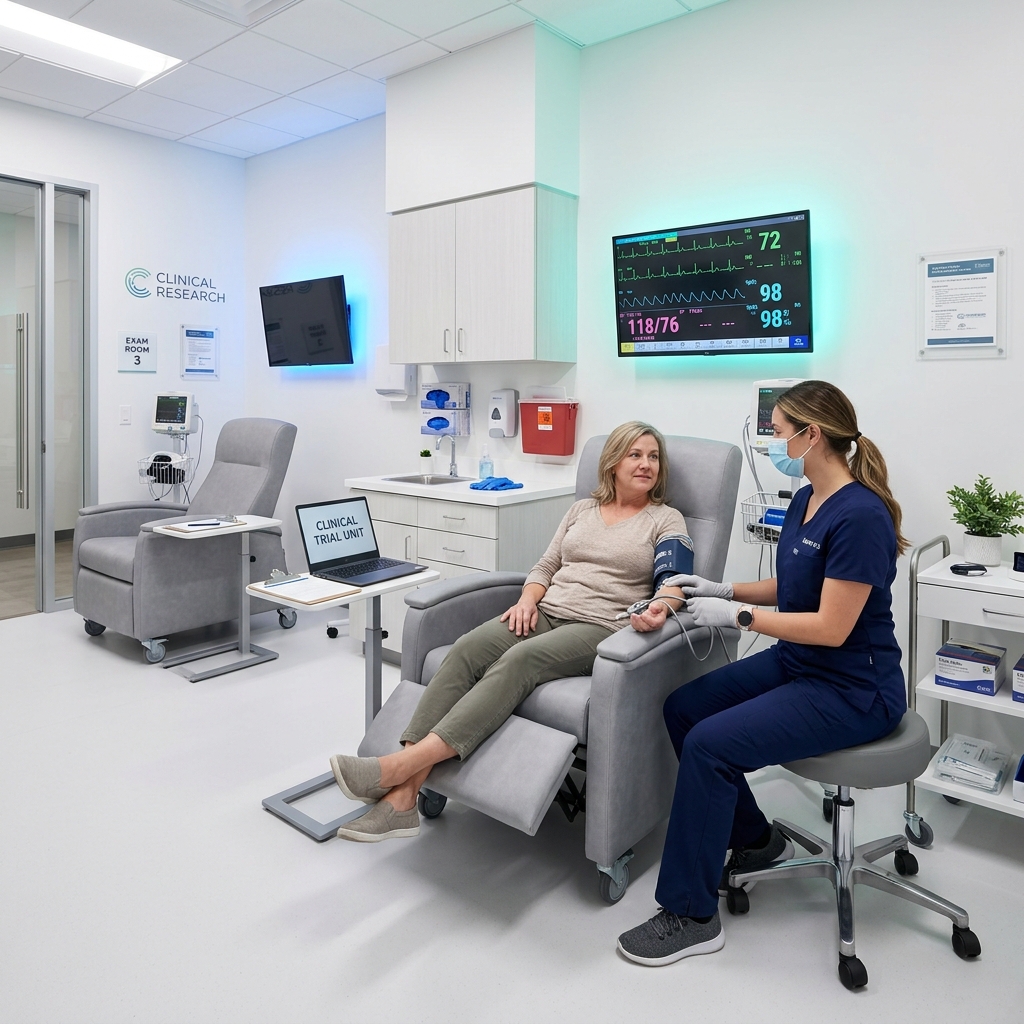
Becoming a Clinical Trial Volunteer with Xplora Clinical Research
At the center of every breakthrough in drug therapy are the volunteers who step forward to take part in clinical trials. By choosing to participate, you may help deliver essential treatments to the patients who need them most
Who Can Volunteer?
Clinical research depends on two types of volunteers.
Healthy Volunteers
As a healthy volunteer, you are eligible to take part in Phase I trials. These early studies are designed to evaluate the safety and tolerability of an experimental medicine, note any side effects, and find the most effective dose to guide future research. Because you don’t have the condition the drug is meant to treat, you won’t receive direct medical benefit, which is why compensation is often offered for your time and commitment.
Patient Volunteers
If you live with a medical condition that a new treatment is targeting, you may qualify for Phase II through IV clinical studies. Patient volunteers receive access to advanced therapies that are still in development, along with expert medical care, while also contributing to medical progress. However, there are potential risks, such as side effects, uncertain outcomes, and the time required to participate. You may or may not benefit from the treatment being studied—in some cases, participants receive a placebo, which has no therapeutic effect.
What It’s Like to Participate
Thorough Screening and Safety Monitoring
Before joining a trial, you will undergo a screening process to confirm that you meet the eligibility criteria. During the trial itself, the medical team will closely monitor you for any side effects. All studies must be reviewed and approved by the relevant regulatory authorities and ethics committees.
Clinical trial safety
Before joining a trial, you will undergo a screening process to confirm that you meet the eligibility criteria. During the trial itself, the medical team will closely monitor you for any side effects. All studies must be reviewed and approved by the relevant regulatory authorities and ethics committees.
Care from Highly Trained Experts
Throughout the trial, you will be supported by a dedicated team of medical professionals, including nurses and doctors. If you are a patient volunteer, it is also important to continue communicating with your usual healthcare providers
Exams and Procedures Are Covered
All medical exams, tests, and procedures that you receive as part of the study are provided at no cost to you. Healthy volunteers do not receive therapeutic benefits from Phase I trials because they do not have the target condition, so they are frequently compensated for their commitment. Compensation for time and travel expenses is also often available for patient volunteers.
You Can Stop at Any Time
All trials are entirely voluntary. If you decide to leave the trial, you may do so at any time and for any reason
Understanding Risks and Benefits
For patient volunteers, possible benefits include access to cutting-edge treatments and expert medical care. Risks may involve side effects, uncertain outcomes, and the time commitment involved. Before you decide to participate, the known risks will be explained in an informed consent document, which you will read and sign if you choose to proceed. We also encourage you to speak with your healthcare provider before making a decision.
The Four Phases of Clinical Trials
An experimental medicine must successfully complete three phases of clinical testing before it can be approved by a country’s regulatory agency and made available to the public. The fourth phase takes place after approval.
- Phase I – Generally involves healthy volunteers (except in oncology studies, where cancer patients participate). The goal is to establish the relative safety and tolerability of the treatment in light of any side effects, and to identify the most effective dose as a starting point for later studies in patients.
- Phase II – Involves patients who have been diagnosed with the condition that the drug is intended to improve or prevent. This phase measures the treatment’s effectiveness against the condition, while continuing to monitor safety and possible side effects.
- Phase III – Involves a large number of participants, often from around the world. It aims to confirm the safety of the medicine in larger populations and compare the optimal dosage against existing treatments or placebos.
- Phase IV – Takes place after the medicine has been approved and is being used in the real world. These studies help determine the long-term safety of the drug.
Eligibility Criteria
Every clinical trial has its own rules about who can enroll. Eligibility may be based on age, gender, sex assigned at birth, type and stage of disease, overall medical history, and many other factors.
How to Participate
Healthy volunteers can find Phase I studies by visiting the websites of our trial locations around the world. You can browse Xplora Clinical Research trials and filter them based on eligibility requirements to see which ones may be a good match for you.
Patient volunteers can search for clinical trials at the links below. Many academic medical centers, community hospitals, and centers of excellence offer a wide variety of clinical trials for many diseases and conditions. Speak with your healthcare provider to learn more.
Notice for Study Participants
Please keep in mind that clinical trial/study participants must contact their investigator at their study site. The investigator will be able to make the necessary link to subject identity. Outside of Xplora Clinical Research’s own early phase clinical units, Xplora Clinical Research does not hold information that would allow Xplora Clinical Research to directly identify clinical trial/study participants. Following International Council for Harmonisation of Good Clinical Practice (ICH GCP) confidentiality guidelines, neither Xplora Clinical Research nor the study sponsor is able to identify trial/study participants without the involvement of study centers or investigators.
Inquiries, Complaints and Information Corrections
To be removed from our contact lists, or to access, correct, or update your personal information that we have collected through this website, or to submit a complaint, please contact us by sending an email to info@xplorahealth.com